
Mint Road's proposals on banks' M&A funding are cautious even as entrants root for more elbow room, and weigh business models.

Last fortnight, State Bank of India Chairman C S Setty lifted the veil on a subject long spoken of in corporate corridors: Why can't our banks finance mergers and acquisitions (M&As)? Change is in the air: Indian Banks' Association (of which Setty is the chairman) is to "make a formal request" to Mint Road to make way for it. Thus far the exclusive turf of foreign banks even though its funding remains offshore - as in, it's not on these entities rupee-book (and a few select shadow banks) - a most lucrative segment in the investment banking suite, M&As, will be homeward-bound.

Little attention is paid to the management of currencies and coins in India.

The CBI, in its FIR, alleged that Mayaram, the UK-based company De La Rue International Ltd and unidentified officials of the finance ministry and RBI hatched a criminal conspiracy to extend undue favour to the firm.

The target was for banks to sell Rs 2 trillion worth of non-performing assets to NARCL, the so-called 'bad bank, by 2021-2022. Only 10 per cent of this has been executed.
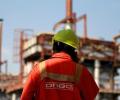
Senior bureaucrats Avinash Joshi and Niraj Verma are among the 10 candidates who are in the race to become chairman and managing director of India's largest oil and gas producer, ONGC. Mangalore Refinery and Petrochemicals Ltd (MRPL) director-finance Pomila Jaspal and ONGC director for technology and field services Om Prakash Singh are the other prominent names in fray for the top job, according to a candidate shortlist by the Public Enterprise Selection Board (PESB). PESB - the government headhunter - will hold interviews to select the new head of Oil and Natural Gas Corporation (ONGC) this week. Both the bureaucrats are from the 1994 batch of IAS officers belonging to the Assam-Meghalaya cadre.

What's the real reason behind ATMs running dry even in states that are not election-bound, wonders Nivedita Mookerji.

Use cheques, cards to check black money, says Jaitley.

"We will raise Rs 300 crore via bonds of two-, three- and five-year tenures. This will be our maiden bond issuance and is part of our effort to widen funding sources," says Vimal Bhandari, executive vice-chairman and chief executive officer (CEO), Arka Fincap. The firm, a subsidiary of Kirloskar Oil, is only five years old and small (assets of around Rs 5,000 crore with an "AA" rating), but the response to this float will be closely watched: It would be the first by a non-banking finance company (NBFC) after Mint Road upped the risk weights on bank exposures to them by 25 percentage points. The move by the Reserve Bank of India (RBI) has caught NBFCs off guard even though the issue had been flagged by Governor Shaktikanta Das with their corner-room occupants (and that of banks) in July and August 2023 - on consumer credit and the dependency on bank borrowings.
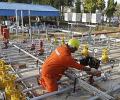
Government headhunter PESB on Friday did not find anyone suitable from nine candidates, including two serving IAS officers, to head India's largest oil and gas producer, ONGC. The Public Enterprise Selection Board (PESB) interviewed 9 out of the 10 candidates who had applied for the post of chairman and managing director of Oil and Natural Gas Corporation (ONGC). "Keeping in view the strategic importance and vision for the company and its future, the Board did not recommend any candidate and decided to constitute a Search Committee," PESB said in a notice after interviews. Those interviewed included senior bureaucrats Avinash Joshi and Niraj Verma.

The RBI has shelved its plan for polymer notes more than a decade after it invited interest from global manufacturers for one billion pieces of Rs 10 denomination polymer banknotes, reveals Tamal Bandyopadhyay.

The difference between what the banks play in the US and India is not that of soccer and football but rugby and football. SVB also has a unique character. But when risks are mispriced, the fallout could be very similar, points out Tamal Bandyopadhyay.

Flush with liquidity, banks are eager to lend. And, therein lies the problem, warns Tamal Bandyopadhyay.

The brand new bankruptcy process is being brazenly gamed by those with connections and money. The touts and fixers of the previous regime have been replaced by a new set close to this one, observes Debashis Basu.

In the midst of its bloody battles with the Supreme Court and Sebi, Sahara group gets the Calcutta high court to issue a stay order on the publication of the book, Sahara: The Untold Story, by Tamal Bandyopadhyay.
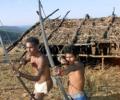
It is the low cost of iron ore extracted from their adivasi homeland mines that enables steelmakers like Tata Steel and Essar, and miners like NMDC, not only to be among the most profitable companies in India, but also gives it the financial muscle to make huge overseas acquisitions. Ultimately, it is the poor adivasi who pays for it with his home and hearth and gets no credit for it! Either from the State, which connives in their exploitation, or the industry that lords over their resources, says Mohan Guruswamy.
 © 2026 Rediff.com - Advertise with us - Disclaimer - Privacy Policy - Sitemap - Feedback - About us - Terms of use - Grievances